
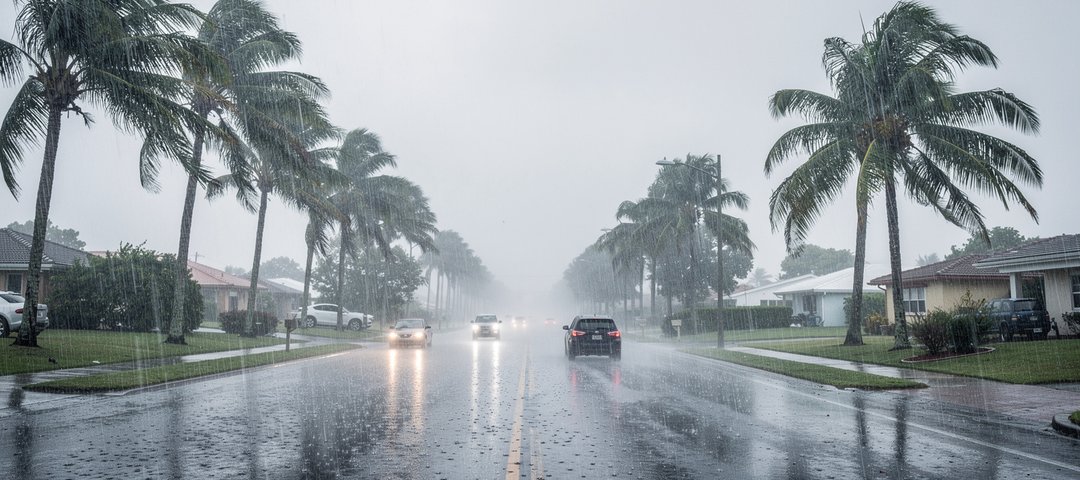
Hurricane Season and Car Accidents in South Florida
Hurricane season officially runs from June through November — but South Florida drivers know dangerous conditions arrive well before the first named storm. Afternoon thunderstorms, tropical depressions, and the occasional early-season hurricane watch change the driving environment in ways that directly raise crash risk. Wet roads, reduced visibility, flooded intersections, wind-scattered debris, and gridlocked evacuation routes all make accidents far more likely.
What many drivers do not fully grasp is the legal dimension of weather-related accidents. If another driver caused your crash during a storm or in deteriorating conditions, their negligence does not disappear because the weather was bad. Florida law requires every driver to exercise reasonable care under the circumstances — and bad weather is one of those circumstances, because a reasonable driver slows down and adjusts to it.
If you have been injured in a car accident during or around a weather event in Broward County or anywhere in South Florida, HLM Injury Lawyers can help you understand your rights and options.
Does Bad Weather Excuse a Driver’s Negligence?
The short answer is no. A driver who causes an accident during rain, flooding, or other adverse conditions cannot use the weather as an excuse to escape liability.
Florida law requires every driver to exercise reasonable care under the circumstances — and those circumstances include the prevailing weather. A reasonable driver in heavy rain reduces speed, increases following distance, turns on headlights, and avoids sudden maneuvers on slippery surfaces. A driver who ignores these adjustments and causes a crash has breached their duty of care — even if they argue “the road was wet” or “visibility was poor.”
In fact, adverse conditions often strengthen a negligence argument. When conditions are clearly dangerous, a driver who keeps speeding, tailgating, or driving inattentively is showing less care than the situation demands — not merely the same lack of care they might show on a clear day.
Common Weather-Related Accident Scenarios in South Florida
Hurricane season introduces several specific accident risks that Broward County drivers encounter each year:
- Standing water and hydroplaning: Florida roads are designed to drain quickly, but heavy rainfall can outpace that drainage and pool at low points. Hydroplaning — where a vehicle’s tires lose contact with the road and ride on a film of water — can happen suddenly. Drivers who fail to slow down in wet conditions face greater hydroplaning risk and a reduced ability to stop or steer.
- Debris on roadways: High winds scatter debris — branches, loose objects, construction materials — onto roadways with little warning. Drivers who cannot stop, or who swerve abruptly to avoid debris, can cause multi-vehicle accidents. If a municipality knew about road debris and failed to clear it, there may be additional avenues for liability.
- Reduced visibility: Heavy rain, blowing spray, and fog sharply cut how far ahead a driver can see. Rear-end collisions are especially common when visibility drops suddenly and following distances are too short.
- Flooded intersections: Some of Broward County’s lower-lying intersections flood regularly during significant storms. Drivers who try to cross flooded roads, or who misjudge whether a flooded intersection is passable, can cause accidents involving other vehicles or pedestrians.
Evacuation Route Congestion
When a significant hurricane threatens South Florida, state and local authorities issue evacuation orders. Interstate 95, the Florida Turnpike, US-1, and other major routes grow densely congested as tens of thousands of residents try to leave at once. In that environment, the conditions for accidents multiply rapidly.
Prolonged stop-and-go traffic raises rear-end collision risk. Stressed drivers who have been in their vehicles for hours make errors in judgment. Drivers unfamiliar with evacuation routes take unexpected turns. And some drivers — despite the risk to themselves and others — drive aggressively to get ahead.
An accident during an evacuation is still an accident governed by ordinary negligence principles. The fact that an evacuation was underway does not change the duties drivers owe each other on the road.
Flood-Damaged Vehicles and Insurance Complications
Hurricane flooding creates a separate category of vehicle-related issues. Vehicles soaked with water — even if they seem to run normally afterward — often have compromised electrical systems, braking components, airbag systems, and structural integrity. A vehicle that was flooded and then driven without proper inspection poses risks to its driver and other road users.
If a flood-damaged vehicle contributes to a crash, the liability analysis may involve the vehicle’s owner, a dealer who sold a flood-damaged vehicle without disclosure, or an insurer handling a complex flood claim. These situations require careful legal analysis.
How insurance policies respond to hurricane-season accidents depends on the individual policy and the nature of any emergency declaration. If you have questions about coverage for a storm-related accident, have an attorney review your specific policy terms rather than relying on general assumptions about how coverage applies.
What to Do After a Weather-Related Accident
The steps following a weather-related accident are generally the same as any crash—with a few additional considerations:
- Call 911: Get law enforcement to the scene. The police report is essential. In severe weather, officers may take longer to arrive — stay safe and document as much as you can while you wait.
- Document the conditions: Photograph the road, standing water, debris, weather, skid marks, and damage. These images directly document the conditions that caused or contributed to the crash.
- Seek medical care immediately: Some South Florida roads and medical facilities face disruption around major storm events. Do not let logistics delay your medical evaluation. Your health comes first, and a treatment record connected promptly to the crash is important to your claim.
- Preserve evidence of road conditions: Weather-related evidence — flooding levels, road debris — can change within hours as conditions improve. Documentation at or near the time of the crash is far more valuable than anything gathered later.
- Consult an attorney: Weather-related accident cases sometimes involve complex liability questions — government entities, multiple drivers, or insurance complications. An attorney can assess the full picture and advise on the best path forward.
The Statute of Limitations Still Applies
Florida’s two-year statute of limitations for personal injury claims — set by HB 837 (Florida’s 2023 tort reform law), which reduced the prior four-year period — runs from the date of the accident, not from the resolution of the storm or the end of an emergency declaration. Do not assume a hurricane-related event extends your deadline. It generally does not.
If you have been injured in a weather-related accident during hurricane season in South Florida, do not wait to seek legal advice.
Contact HLM Injury Lawyers — Free Consultation
Questions about your claim? Call HLM Injury Lawyers at (305) 842-2100 for a free consultation. Attorney Eric A. Hernandez and the team at HLM serve clients in Coral Springs, Parkland, Coconut Creek, Margate, Tamarac, Pompano Beach, and all of Broward County.