
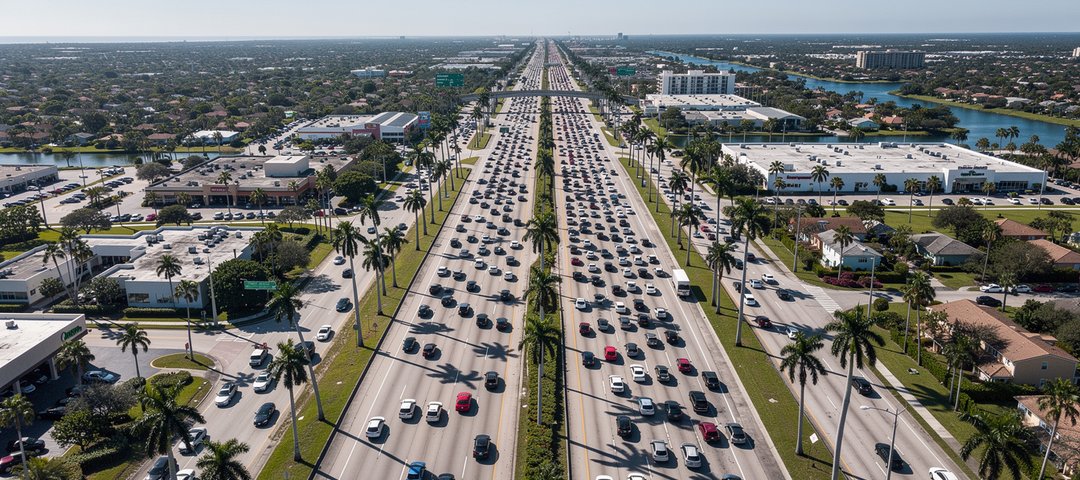
Thanksgiving and Holiday Travel: Accident Risks on Florida’s Highways
Thanksgiving marks the beginning of Florida’s busiest travel season. Every year, millions of people flood I-95, the Florida Turnpike, and local Broward County roads — heading to family dinners, airport terminals, and holiday destinations. The combination of high traffic volume, fatigued drivers, distracted motorists, and an uptick in impaired driving makes the Thanksgiving holiday weekend among the most dangerous stretches of the year on Florida’s roads. If you are traveling this holiday season, knowing the risks — and your rights — could make all the difference.
Why Thanksgiving Weekend Is Especially Dangerous on Florida Roads
The Thanksgiving travel period typically stretches from the Wednesday before through the Sunday after the holiday. During that window, Florida’s major corridors carry dramatically elevated traffic. I-95 through Broward County connects Miami-Dade, Fort Lauderdale, and West Palm Beach — one of the most heavily traveled stretches of highway in the southeastern United States. The Florida Turnpike serves as an interior alternative, but its ramps and merge points create their own congestion hazards.
Several factors converge to spike accident rates during this period:
Traffic volume. More cars on the road means more exposure to hazards. Congestion creates stop-and-go conditions where rear-end collisions and multi-vehicle pile-ups are common.
Fatigued driving. Holiday travel often involves early departures, late arrivals, and long drives. Drowsy driving is a serious cause of accidents — a driver who has been behind the wheel for six hours is meaningfully impaired even if they have not touched alcohol.
Distracted driving. Holiday stress, navigation apps, phone calls to family, and in-vehicle distractions all compete for driver attention at the precise moment maximum focus is needed.
Impaired driving. Thanksgiving is one of the most significant drinking holidays of the year. Family gatherings, holiday parties, and extended celebrations mean more intoxicated drivers on the road — particularly on Wednesday evening, Thanksgiving night, and the days that follow.
Out-of-state drivers. South Florida draws a large influx of visitors during the holiday season. Drivers unfamiliar with Florida’s highway interchanges and local traffic add unpredictability to roads already stretched to capacity.
The Most Hazardous Corridors in Broward County
Broward County’s road network presents specific hazards during peak holiday travel:
I-95 through Broward. The stretch of I-95 running through Fort Lauderdale and Pompano Beach sees some of the highest crash rates in the state. During the Thanksgiving period, that risk intensifies. Merging traffic from multiple interchanges, high speeds, and an abundance of commercial vehicles create an environment that punishes distraction.
Florida Turnpike. The Turnpike serves as a bypass for I-95 traffic but is not immune to accidents. Exit ramps, toll plazas, and high-speed merges are consistent accident locations.
US-1 and Broward Boulevard. Local arterial roads carry overflow traffic when the interstates are congested. Intersections on these roads see elevated pedestrian and bicycle exposure as foot traffic increases during the holiday season.
Fort Lauderdale-Hollywood International Airport access roads. Thanksgiving is one of the busiest air travel periods of the year. The roads approaching FLL — including I-595 and SR-84 — are gridlocked for extended periods, and driver frustration contributes to aggressive maneuvers.
Tips to Reduce Your Holiday Travel Risk
You cannot control other drivers, but you can reduce your own exposure:
- Travel during off-peak hours. Wednesday afternoon and evening and Sunday afternoon are the most dangerous windows. Early morning departures before traffic builds dramatically reduce exposure.
- Build in rest stops. Do not drive more than two to three hours without a break, particularly on long routes.
- Do not drive impaired. If you are celebrating, designate a driver or use a rideshare service. There is no scenario in which driving after drinking is acceptable.
- Put the phone down. Navigation should be set before you leave. Calls and messages can wait.
- Maintain following distance. In stop-and-go holiday traffic, a three-second following distance becomes more important, not less.
- Check your vehicle. Tire pressure, brakes, and lights should all be confirmed before a long highway drive.
What to Do If You Are Injured in a Holiday Travel Accident
If you are involved in an accident on I-95, the Turnpike, or any Broward County road during the holiday season, the steps you take immediately afterward protect both your health and your legal rights.
Call 911. A police report documents the accident and preserves critical details — vehicle positions, road conditions, witness accounts, and any citations issued to the at-fault driver. Never leave an accident scene without ensuring a report is filed.
Seek medical attention immediately. Even if you feel fine at the scene, the adrenaline response to a crash can mask significant injuries. Soft tissue injuries, concussions, and internal trauma often do not produce obvious symptoms for hours or days. Emergency evaluation creates the medical record that connects your injuries to the accident.
Photograph everything. Document the vehicles, the road conditions, any visible injuries, and the scene itself. Out-of-state drivers may be difficult to locate afterward — thorough documentation at the scene is essential.
Exchange information. Driver’s license, license plate, and insurance information from every vehicle involved. Out-of-state visitors involved in Florida accidents are subject to Florida law, but their insurance coverage may be handled through their home state’s insurer.
Contact an attorney before speaking to insurance companies. Holiday-season accidents often involve multiple parties, out-of-state insurers, and complex liability questions. An experienced attorney can coordinate the investigation and protect your interests from the beginning.
Florida’s Two-Year Statute of Limitations
Under Florida law, you have two years from the date of an accident to file a personal injury lawsuit. This deadline — set under HB 837, Florida’s 2023 tort reform law, which cut the prior four-year period to two — applies to Thanksgiving weekend accidents just like any other. Do not let the holiday season, the recovery period, or the complexity of an out-of-state driver’s insurance situation cause you to miss this window.
Contact HLM Injury Lawyers — Free Consultation
If you or a family member is injured in an accident during the Thanksgiving holiday travel period in Broward County or anywhere in South Florida, HLM Injury Lawyers is ready to help. Attorney Eric A. Hernandez — a former Assistant U.S. Attorney with over 25 years of trial experience — represents accident victims throughout Coral Springs, Parkland, Coconut Creek, and the surrounding region. Call (305) 842-2100 for a free consultation. No fee unless we recover for you.